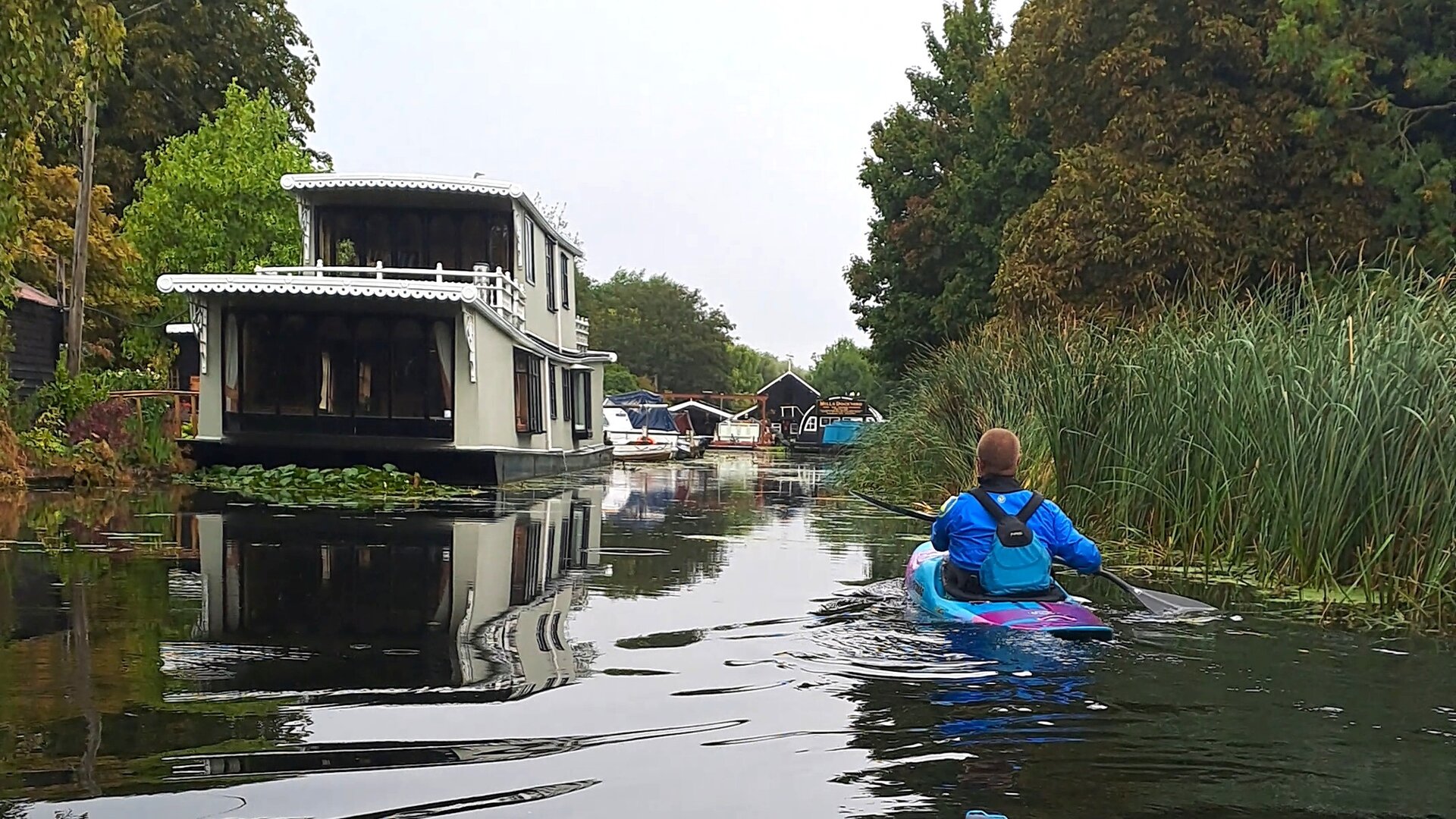
Paddle from Trent Lock, close to the River Trent, with views of the famous Ratcliffe-on-Soar Power Station cooling towers. The route is a mix of industrial and rural, with plenty of wildlife to spot along the way. (Waterways licence required. Find out more).
Distance: 8km
Time: 2 hours
Sat Nav: NG10 2FY
What3Words: ///raves.photo.decent
We parked at Trent Lock car park, off Lock Lane, in Sawley, Derbyshire.
Conveniently, there’s public toilets just across the road.
Once we unloaded our equipment, we walked left past the Trent Lock pub, and towards our starting point, near to The Steamboat Inn.

Trent Lock, the first lock of the Erewash Canal, is about 100m from the car park.
Once on the water, paddle north, with the River Trent, and a view of the Ratcliffe-on-Soar power station, behind you.
You’ll pass some impressive house boats on your left.
Mills Dockyard, which has been operated by the Mills Family since 1895, is on your left after about 300 metres.

Pass under a footbridge before paddling under two rail bridges, and then Fields Farm Road.
Despite the proximity to roads, housing, factories, and building sites, the water is beautifully clear and full of wildlife.
You can see to the bottom where you’ll notice fish swimming about.

After paddling under Tamworth Road you’ll see the Long Eaton Sea Scouts building on your left.
Further along, with West Park to your left, you’ll pass under Green Bridge.
There are a number of furniture factories on your right.
Long Eaton Lock, after about 2.5km, is the only lock you have to portage on the route.
After we had paddled in total for about 4km, we turned around and headed back towards our start point at Trent Lock.
Once we got changed and packed up our equipment we had a lovely lunch at The Trent Lock pub.

Erewash Canal history
The Erewash Canal was opened in 1779 for the transportation of coal, quarry stone, bricks and metal goods.
Due to the popularity of rail, profits eroded, and only iron goods from the Stanton works continued.
The Erewash Canal was bought by the Grand Union in 1932, and cargoes included bomb shells during World War II.
However, in 1962 the former British Transport Commission declared parts of the canal unnavigable.
Later, restoration work led to the Erewash Canal being upgraded in the 1980s from ‘remainder’ to ‘cruise way’ status.
The Canal and River Trust have more information about the waterway’s history here >>
