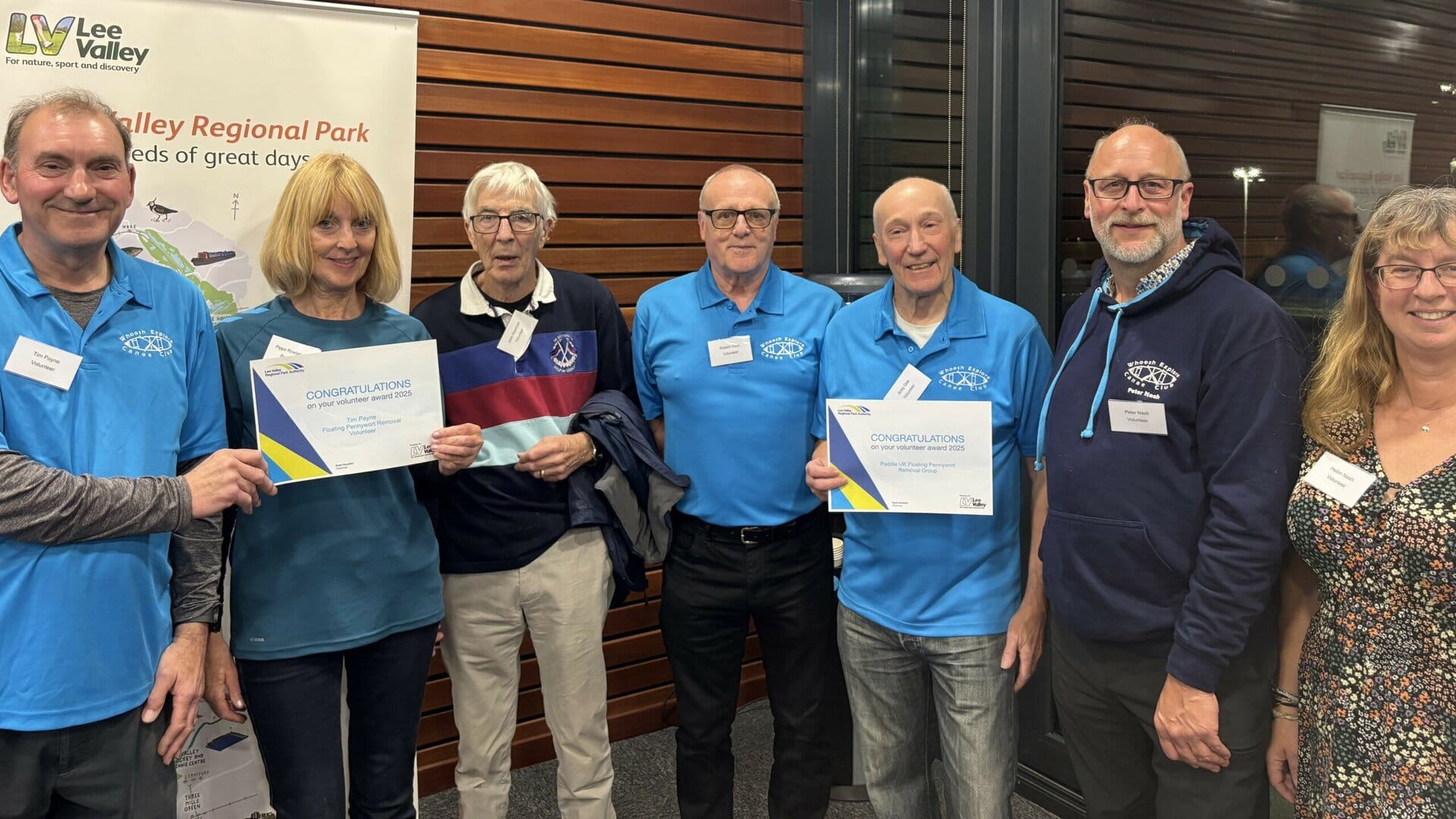
The Lee Valley Floating Pennywort group has been recognised Lee Valley Park Volunteers Awards evening for their ‘outstanding dedication’ in removing the spread of the invasive species on the River Lee.
This achievement is thanks to the dedication of volunteers who have been working to protect our waterways.
Paddle UK is delighted that the volunteers have been acknowledged for their hard work.

Floating pennywort is a highly invasive aquatic plant that can grow up to 20cm per day.
It forms dense mats that impede water flow, impact biodiversity, and affect recreational activities.
Its presence can lead to deoxygenation, block sunlight, and even increase the risk of flooding.
That’s why Paddle UK and The Angling Trust are committed to removing and controlling its spread.
The group’s events are run by Pip Rowlandson, Environment Project Lead at Paddle UK and Drew Chadwick, the Fisheries Manager from Angling Trust, as a joint partnership.
They prioritise biosecurity, teaching all the volunteers the importance of Check, Clean, Dry protocols to prevent the spread of invasive species.
This ensures that huge efforts don’t inadvertently harm the environment.

Pip Rowlandson said:
“We’re grateful for the dedication of our volunteers from Leaside Trust, Springfield Marina, Whoosh Explore Canoe club, Thames Water employees, Environment Agency employees, Leaside Trust, Lea Rowing Club Jackson Civil Engineering, Lee Valley Park, Thames 21, and many other local communities and organisations.
“Together, we’ve achieved significant milestones, including the clearance of Springfield Marina where we trained the local residents and employees (Tracey and Mike) to maintain the work.
“They are doing an amazing job keeping it clear of floating pennywort by going our in boats and being on the bank to compost and dispose of it responsibly.”
“Our work goes beyond just removing floating pennywort. We’re creating a legacy that will continue to benefit the environment long after we’re gone.
“By teaching others about biosecurity and the importance of protecting our waterways, we’re ensuring that the work will continue.”
Find out more about invasive species and how to tackle it >>
