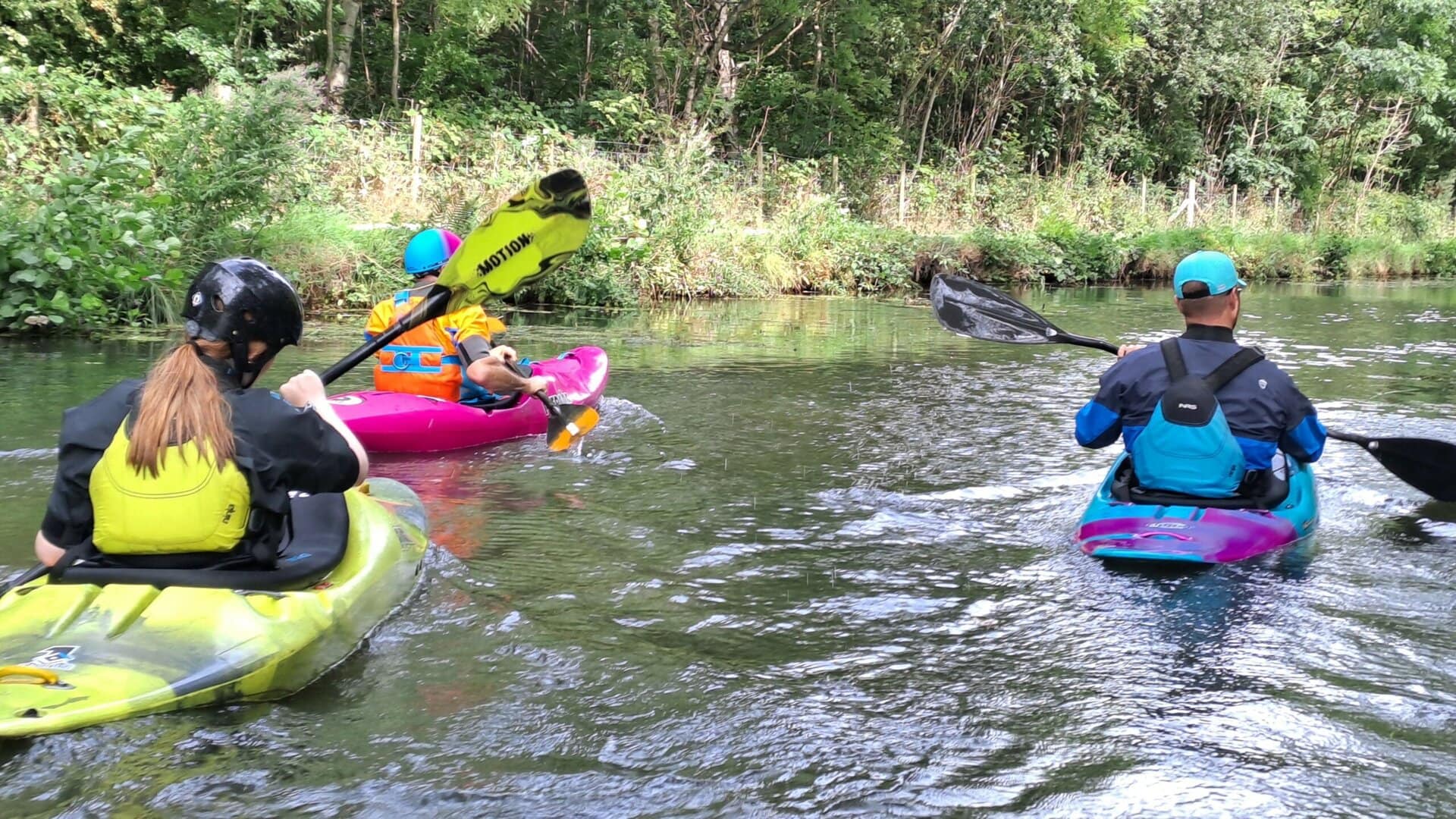
Blue spaces are being used recreationally in more places, and across more months, than the current bathing water regulations cover, according to an Environment Agency (EA) report.
The EA Chief Scientist’s Office worked with 17 organisations, including Paddle UK and other members of the Clean Water Sports Alliance, to collate over 13,500 records of swimming, paddling, rowing, sailing, and surfing, using data from 2017 to 2024.
The ‘Exploring water recreation in England’ report revealed 3,347 distinct locations where activities are taking place.
For paddling activities, the Agency drew upon data from Paddle UK’s PaddlePoints platform to map the locations of clubs, Delivery Partners and access points.
Share your photos and experiences of using England’s waterways for recreation with The Guardian >>
The report says there are three times as many inland freshwater sites (2,521) as there are coastal and estuarine locations (826).
For context, there are currently only 451 designated bathing waters, of which just 15 are rivers.

Ben Seal, Head of Access and Environment welcomed the new report:
“Given the huge growth in demand for recreational use of blue spaces, an audit of where and when people are participating is long overdue.
“This report by the Chief Scientist’s Office provides a comprehensive national picture of where people are using our blue spaces, in a level of detail that we have not seen before.
“Hopefully its findings can help focus the attention of decision makers on protecting, improving, and expanding the spaces people rely on for recreation.”
While this report is the most comprehensive assessment of water recreation that has been undertaken for many years, Ben went on to highlight the limitations of what the data can show:
“We know that a huge amount of water activity happens informally; around our coast and on our rivers.
“People access the water from small laybys to beaches, secluded lake sides and along estuaries.
“So getting an accurate handle on the true scale of when and where participation is occurring will always be very challenging.
“Nevertheless, this report goes a long way to painting a clear picture of where water sports are taking place and where there are gaps.
“The report will be a valuable tool to help us make the case for water recreation and the need for clean, accessible waters.”
Dr Robert Bradburne, Chief Scientist for the Environment Agency, said:
“For the first time, we have robust and insightful data on how people use our waterways on a national scale.
“Communities are using our rivers, lakes and seas for many reasons and it is clear that the way people interact with their local water environments has changed over time.
“We want to support water users by helping them to make informed decisions when out on the water.
“This data will help us to plan our resources effectively as we work with the Government to implement their bathing water reforms.”

The ‘Exploring water recreation in England’ report also confirms what The Clean Water Sports Alliance has been championing for a long time.
Recreational water use is happening in far more places — and across more months of the year — than the current bathing water regulations cover.
Only 20% of the swimming locations identified were within 500m of a designated bathing water site.
Paddlers are using inland waters and the sea all year round and outside of the mid-May to September bathing season.
Share your photos and experiences of using England’s waterways for recreation with The Guardian >>

This highlights the need for stronger protections and broader recognition of “recreational waters” in policy.
Earlier this year, the Government committed to reviewing whether the definition of bathing waters needed to change to include more user types.
It also committed to extending the dates of the current bathing season to better reflect how people are participating.
What this means for the CWSA:
-
Our voice is being heard – Our concerns and ambitions are influencing national policy conversations
-
Smarter infrastructure planning – With a clearer picture of where open water swimming already happens, we can identify where to engage with water companies, where to support new spaces for events, and where to protect existing ones
-
Open data for collaboration – The project leaves us with a new, open dataset of recreational hotspots across England which can support future planning and partnerships
-
Policy momentum – The report strengthens the case for moving from a narrow ‘bathing water’ designation to a broader ‘recreational water’ status in policy, recognising the diversity of sports across the Alliance
The Clean Water Sports Alliance are grateful to the Environment Agency’s Chief Scientist’s research group.
With this new evidence base we can make better-informed decisions, build stronger partnerships, and advocate more effectively for the water environments that underpin our sports.