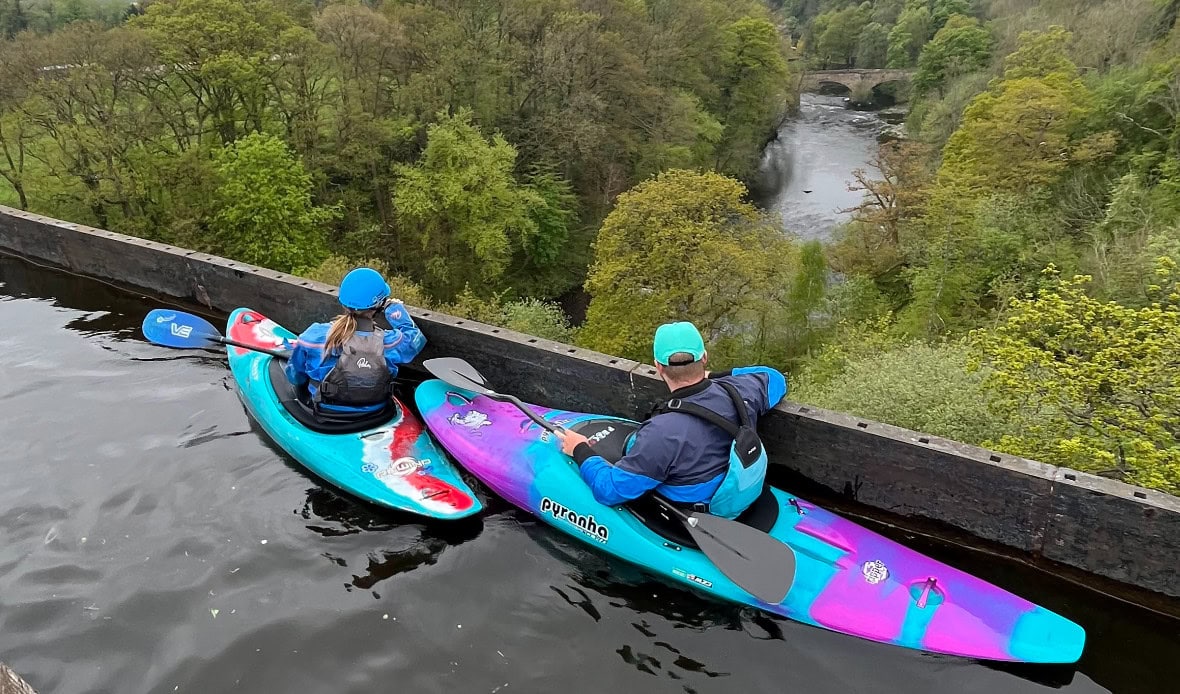
A waterways licence, also known as a river licence, is a permit required to paddle on many managed canals and rivers in England and Wales.
Do I need a waterways licence to paddle?
You need a waterways licence for your kayaks, canoes and paddleboards, if you want to keep or use it on most rivers and canals.
Check which rivers and canals require a waterways licence >>
This applies to any boat with or without a motor.
Canoes, paddleboards and kayaks are classed as ‘boats’ for this purpose, so the same rules, and fines, apply.
Registering or licensing your boat depends on the waterway you want to use.
If you’re an ‘On the Water’ member of Paddle UK you do not need to licence or register your canoe, kayak or paddle board with individual authorities.
This ‘all in one’ membership covers waterways managed by the Canal and River Trust, Environment Agency, Broads Authority, the Basingstoke Canal, Cam Conservators and the Avon Navigation Trust.

Who can ask to see my waterways licence?
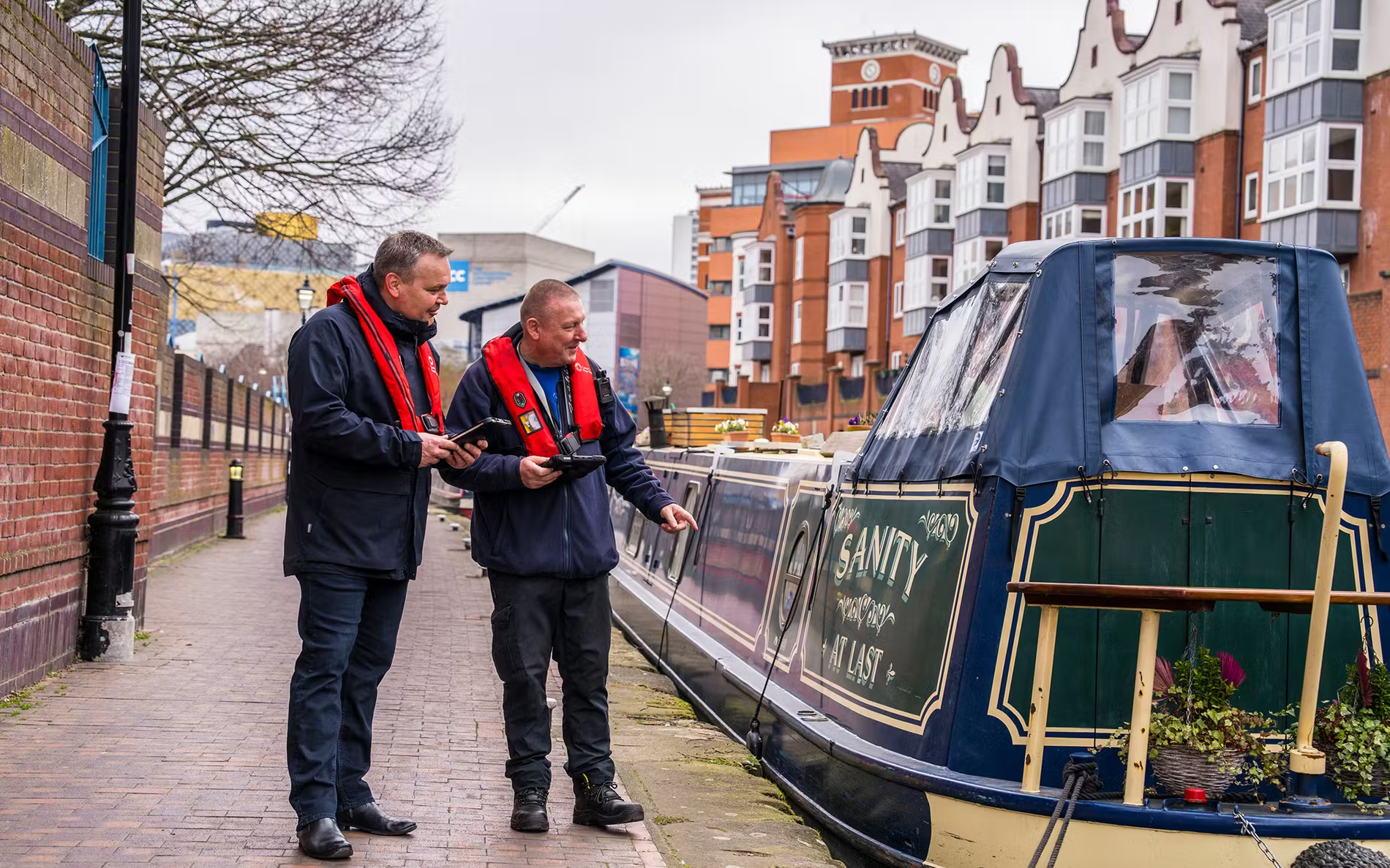
An officer from the Navigation Authority, such as a ranger, lock keeper or patrol launch crew may stop you and ask to see your licence.
They will always be clearly identifiable and will have a means to prove their ID to you (like a name badge or ID card).
What do I show an officer?
Just show your Paddle UK membership on your phone, a physical membership card if you have one, or a printed off version (or your local licence evidence).
It’s as simple as that.
What if I don’t have a licence or a Paddle UK membership?
An officer from the Navigation Authority may need to complete a report and / or hand you an enforcement notice if you’re on an inland waterway.
They are responsible for enforcing laws that protect the environment and ensure compliance with regulations related to inland waterways so everyone can enjoy them fairly.
You may be fined up to £1,000 or have your boat removed if you do not have an up-to-date licence/registration.
Where does the money from the waterways licence go?
Money from licences contributes to the work of various authority’s officers, who help create better places for people and wildlife.
The money also supports sustainable development.
Officers patrol waterways to monitor activities and identify potential issues – like sources of pollution.
Funds also help maintain the waterways including keeping portage points safe.

Maintenance can also include dredging, lock repairs, and general upkeep of the canals and rivers.
Fallen trees are also cleared to allow easier access for all paddlers and boaters.
The money also helps keep the waterways accessible by cleaning and maintaining the waterways, repairing flood damage, and removing debris that can cause blockages.
Money also goes to helping control and removing invasive species like floating pennywort, which can clog waterways.
Water pollution
The Canal and River Trust monitor pollution and encourage public reporting of any incidents, this may then be referred to the Environment Agency.
Paddle UK is working with other sports organisations over the broader issue of water pollution.
See Clean Water Sports Alliance >>
More information about purchasing a Paddle UK membership, which includes the licence, here.
Paddle UK’s partnership with waterways authorities
A percentage of Paddle UK membership income is passed onto the waterway authorities and reinvested into vital maintenance and environmental work.
This ensures our waterways are kept clean and safe for us and future generations to enjoy.

It’s only fair if everyone, including boaters, rowers and paddlers, comply and have a waterways licence.
As part of its 2025 plan for waterways the Environment Agency said it “will prioritise compliance checks for boat registration [this includes vessels without motors].
“We expect everyone with a boat on our waterways to register it and comply with our registration requirements.
“This is because it is the legal requirement, it is fairer to everyone and will bring in essential income to help us provide our service.”