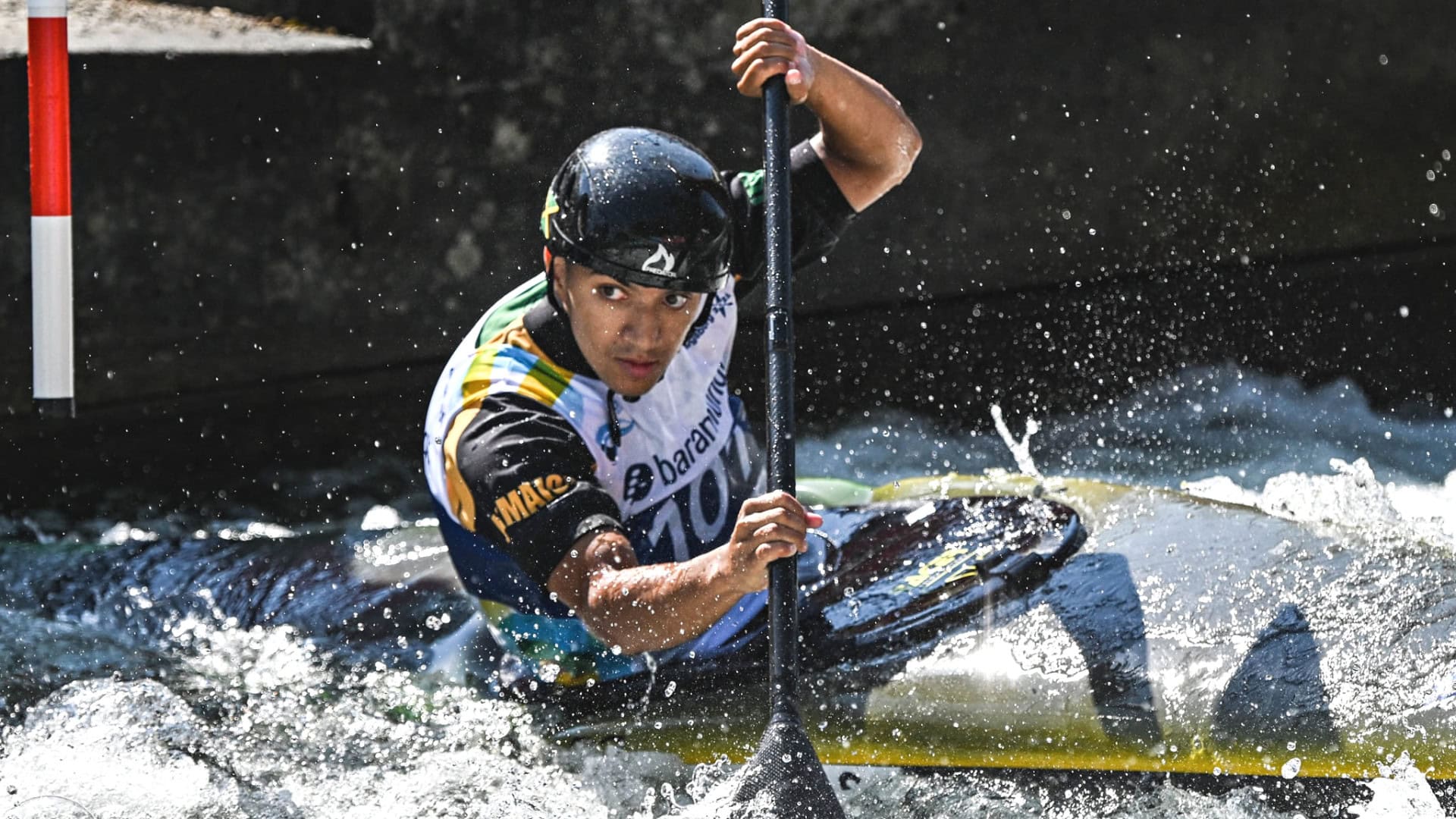
October marks the annual celebration of Black History Month, and as part of our #WePaddleTogether commitments to celebrate role models from under-represented groups, and listen to diverse, intersectional voices, we are pleased to share the insights and stories of Black paddlers from across the paddling community.
In the last year, Solomon Maragh has made history as Jamaica’s first ever slalom athlete and has made significant headway in his ambition to race at the Olympics. He is now focused on qualification at the ICF Canoe Slalom World Championships at Lee Valley in 2023.
Solomon raced in both the 2022 Junior and Senior World championships with continued positivity and confidence. While Solomon is making history, he is also a self-funded athlete from a nation developing both the sport and its economy, and he is balancing his athletic career, including training at the National Water Sport Centre in Holme Pierrepont, Sheffield Canal and Lee Valley White Water Centre, alongside full-time work as an apprentice.

Words by Solomon Maragh
I was born in Sheffield, train at nearby Manvers and am Proud to be Jamaica’s First Canoe Slalom Athlete making my debut at a World Championships. I want to be the first Jamaican to step onto an Olympic podium for Canoe Slalom. I know we have limited resources but I will continue to train hard and learn as much as I can to do my best.
I developed my skills in Ivrea at the Junior Worlds and moved onto Augsburg where I had a few days practice and put in some solid runs, doing some hard moves, I know what I need to do to improve. I want to be on the Olympic Podium for Jamaica, paving the way for more Jamaicans around the world to both take up canoeing recreationally and/or competitively.
Jamaica’s motto ‘Out of Many One People’ comes from the succession of rulers of our Island along with the history of enslaved people from Africa and workers from India and China. My grandparents are Indian-Caribbean as my great grandparents came over from India as children. My grandparents are part of the “Windrush Generation”, and came to the UK, got jobs, got married and started a family.
My Dad was born in Sheffield and married Mum, whose family is from County Durham, England and they took me all over in the canoe, sit on top and kayak even before I could walk. I developed an interest of slalom, and now I have a dream to race at the highest level possible. In 2019, I became a Jamaican citizen and took the first major step to getting to the Olympics.

What does the theme “Proud to be” mean to you during this year’s Black History Month?
Primarily known for our domination of track events, Jamaica is widening its sporting representation. In 2021, we paddled onto the world stage in canoe slalom when, at the age of 16, I crossed the start line at the Junior World Championships in Tacen, Slovenia making history, in not one, but two events as I competed in the Kayak and Extreme Slalom races – both Olympic events. I was excited, nervous and proud to be Jamaican and it’s my job to set the standard and example for other Jamaicans to follow.
What have your experiences been as a Black paddler? What challenges have you faced in your experience?
As a developing nation with just short of 60 years of independence, Jamaica is establishing its political, economic and sporting structures and priorities, so coaching, training and logistic costs are self-funded. This is a significant challenge to any developing nation, especially for those with no history in paddlesports and with other priorities. A gap exists between developed and developing nations.
The Jamaican Canoe Federation (JCF) were more familiar with sprint and after some initial confusion, I was registered with the ICF as a canoe slalom athlete and entered into the 2020 Pan-American Championships with a slim chance to qualify for the Olympics. The COVID pandemic cancelled this and my focus switched to the Junior Worlds where I made history.
During the World Championships, the gap with developed nations became more apparent as they arrived with well-established teams, cultures and operating procedures with support teams, tech teams, coaches, nutritionists and Team Leaders who knew the legitimate shortcuts to getting things done and how to gain a knowledge advantage, which unfortunately Jamaica did not have.
What would you like to share with people wanting to make paddling more inclusive and welcoming of Black communities?
My local club is supportive and hosted the launch of the Jamaica kit although in most clubs we’ve been to, there aren’t many or any black paddlers and therefore no role models or sufficient cultural awareness. It would be great if clubs could look at the community they draw from and do some outreach to make sure the club membership reflects this. I know Manvers are keen to do more.